>>>THIS IS FOR GUIDANCE ONLY – NOTHING SUBSTITUES YOUR LOCAL VETERINARIAN – THIS IS DESIGNED TO AID YOU IN ASKING THE RIGHT QUESTIONS AND TO HELP YOU PLAN AHEAD – FOR INFORMATION PURPOSES ONLY.
YOUR VETERINARIAN IS THE ONLY PERSON THAT SHOULD GIVE YOU AND YOUR ANIMAL SPECIFIC INSTRUCTIONS/ADVICE. <<<
THIS SERVES ONLY AS INFORMATION ONLY TO ASSIST YOU AS YOU NAVIGATE THE COURSE OF PET OWNERSHIP.
***{Much of this is generated by AI and is designed to provide basic information and is NOT designed to replace a licensed veterinarian}

Cats often hide illness or injury, so early observation and calm handling are critical.
- 1. Stay Calm and Secure the Cat
- Speak softly and move slowly
- Wrap the cat gently in a towel or blanket (“kitty burrito”) if injured
- Place the cat in a carrier for safety
- 2. Check Breathing
- Look for chest movement
- If breathing stops, begin rescue breathing
- Close the mouth
- Breathe gently into the nose every 4–5 seconds
- 3. Check for Bleeding
- Apply firm pressure with clean gauze or cloth
- Hold pressure for several minutes without lifting
- Use a bandage if available
- 4. Treat Minor Wounds
- Rinse with clean water or saline
- Apply light bandaging
- Prevent licking if possible
- 5. If the Cat Is Choking
- Look carefully in the mouth for visible objects
- Remove only if easily reachable
- Do not push objects deeper
- 6. Shock Symptoms
- Signs include:
- Pale gums
- Weakness
- Rapid breathing
- Cold extremities
- First aid:
- Keep the cat warm and quiet
- Transport to a veterinarian immediately
- Signs include:
- 7. Poisoning – yes you need a vet
- Remove access to toxin
- Do NOT induce vomiting unless directed by a vet
Plants Toxic to Cats – YES YOU NEED A VET
Highly toxic / common plants dangerous to cats:
- Lilies (all true lilies) – extremely toxic; even pollen can cause kidney failure
- Sago Palm – very poisonous; causes liver failure
- Aloe Vera
- Pothos (Devil’s Ivy)
- Peace Lily
- Philodendron
- Dieffenbachia (Dumb Cane)
- Snake Plant (Mother-in-law’s Tongue)
- ZZ Plant
- English Ivy
- Cyclamen
- Oleander
- Autumn Crocus – extremely toxic
- Foxglove
- Tulip & Hyacinth bulbs
Symptoms cats may show
- Vomiting or drooling
- Difficulty swallowing
- Lethargy
- Tremors or seizures
- Kidney failure (especially with lilies)
Common toxic foods for cats
- Allium family (very dangerous)
- Onions
- Garlic
- Chives
- Leeks
- Shallots
Other toxic foods for Cats
- Chocolate
- Grapes and raisins
- Alcohol
- Raw bread dough (yeast dough)
- Xylitol (artificial sweetener in gum, candy, peanut butter)
- Caffeine (coffee, tea, energy drinks)
- Raw eggs
- Raw meat or fish
- Fat trimmings
- Cooked bones
- Moldy foods
- Dog food (long-term feeding can cause malnutrition)
Possible symptoms in cats
- Vomiting
- Diarrhea
- Weakness or lethargy
- Pale gums
- Tremors
- Seizures
Kitten Preventative Care Guide: Birth to 16 Weeks
0–2 Weeks (Neonatal Stage)
Focus: Warmth, feeding, survival
- Keep kittens warm (85–90°F) — they cannot regulate body temperature
- Feed every 2–3 hours (mother or kitten milk replacer only)
- Stimulate urination/defecation after each feeding
- Monitor daily weight gain (should steadily increase)
- No vaccines or deworming yet unless directed by a vet
2–4 Weeks (Transitional Stage)
Focus: Development & early care
- Eyes fully open; kittens begin walking and exploring
- Start introducing a shallow litter box
- Continue bottle feeding; begin offering gruel (wet food + formula)
- First deworming at ~2–3 weeks (per vet guidance)
- Begin gentle human interaction for socialization
4–6 Weeks (Weaning Stage)
- Transition fully to wet kitten food
- Provide fresh water at all times
- Continue deworming every 2 weeks
- Increase handling and exposure to normal household activity
- Monitor for common issues (URI symptoms, diarrhea, fleas)
6–8 Weeks (Pre-Adoption Stage)
- First FVRCP vaccine (around 6–8 weeks)
- Continue deworming schedule
- Start flea prevention (age/weight appropriate products only)
- Test for FeLV/FIV if recommended
- Maintain strong socialization (people, gentle handling, environments)
8–12 Weeks
- FVRCP booster every 3–4 weeks
- Begin basic training:
- Litter box habits
- Scratching post use
- Continue flea/tick prevention
- Evaluate for spay/neuter readiness (as early as 8 weeks / 2 lbs)
12–16 Weeks
Focus: Final vaccines & surgery
- Final FVRCP booster
- Rabies vaccination (per local law, usually 12–16 weeks)
- Spay/Neuter surgery (if not already completed)
- Microchip and register
- Transition to adoption-ready or permanent home
Ongoing Preventative Basics
- Keep kittens indoors for safety and disease prevention
- Maintain monthly parasite prevention (fleas, ticks, heartworm as advised)
- Feed high-quality kitten food until ~1 year
- Schedule regular veterinary care
Kitten Age Estimation Guide (Field-Friendly — Head-to-Tail Method)
- Closed eyes → 0–10 days
- Just opened, all blue → 1–3 weeks
- Bright blue, focused → 3–5 weeks
- Color shifting (green/yellow) → 5–7 weeks
- True adult color → 7–12+ weeks
Ears & Hearing
- Flat/folded ears → Newborn
- Partially open → ~2 weeks
- Fully upright but small → 3 weeks
- Responsive to sound → 3–4 weeks
- Highly reactive/alert → 5+ weeks
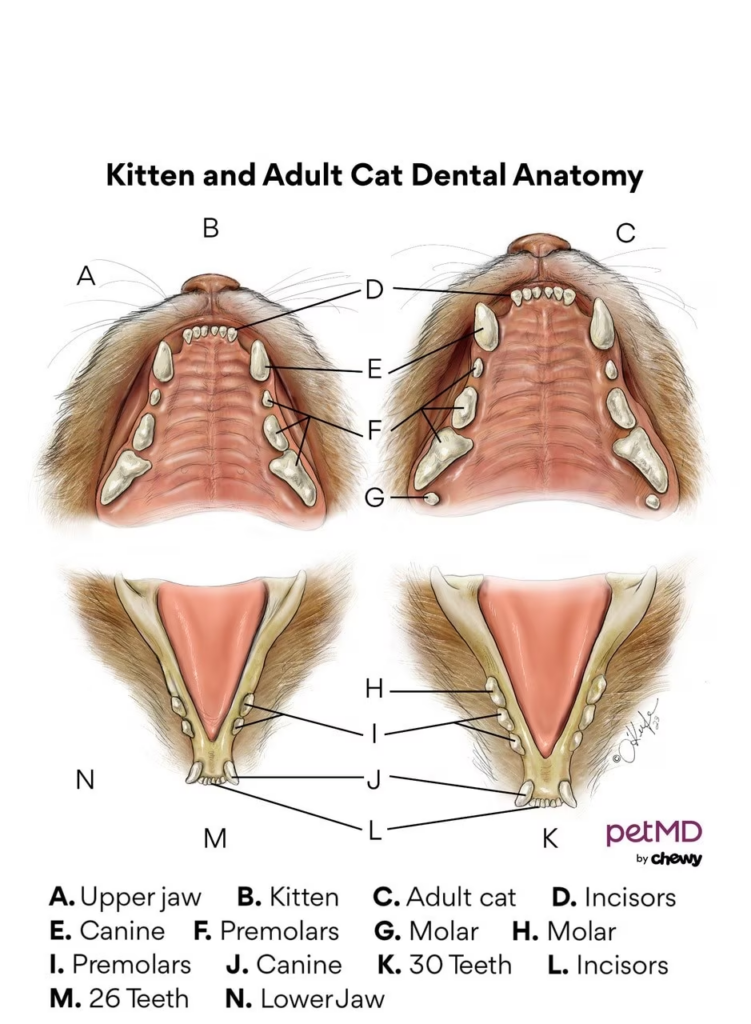
Teeth Development (Most Reliable)
- No teeth → under 2 weeks
- Incisors (tiny front teeth) → 2–3 weeks
- Canines (fangs) → 3–4 weeks
- Premolars appearing → 4–6 weeks
- Full baby set → 6–8 weeks
Mobility & Coordination
- Crawling / scooting → 0–2 weeks
- Wobbly walking → 2–3 weeks
- Walking + exploring → 3–4 weeks
- Running, pouncing → 4–6 weeks
- Climbing, coordinated jumps → 6–8+ weeks
Eating & Behavior
- Nursing only → under 4 weeks
- Interested in gruel → 3–4 weeks
- Eating wet food → 4–5 weeks
- Eating solids confidently → 5–7 weeks
- Fully weaned → 7–8 weeks
Weight Rule (Quick Field Estimate)
- 1 lb ≈ 4 weeks
- 1.5 lbs ≈ 6 weeks
- 2 lbs ≈ 8 weeks