>>>THIS IS FOR GUIDANCE ONLY – NOTHING SUBSTITUES YOUR LOCAL VETERINARIAN – THIS IS DESIGNED TO AID YOU IN ASKING THE RIGHT QUESTIONS AND TO HELP YOU PLAN AHEAD – FOR INFORMATION PURPOSES ONLY.
YOUR VETERINARIAN IS THE ONLY PERSON THAT SHOULD GIVE YOU AND YOUR ANIMAL SPECIFIC INSTRUCTIONS/ADVICE. <<<
THIS SERVES AS INFORMATION ONLY TO ASSIST YOU AS YOU NAVIGATE THE COURSE OF PET OWNERSHIP.
***{Much of this is generated by AI and is designed to provide basic information and is NOT designed to replace a licensed veterinarian}

General First Aid for DOGS:
Dogs are more prone to injuries from accidents, fights, or ingesting harmful items.
- Ensure Safety First
Injured dogs may bite from pain
Use a muzzle or cloth wrap if needed
Approach slowly and calmly - Check Breathing
Look for chest movement
If not breathing:
Close the mouth
Extend the neck
Give breaths into the nose every 3–4 seconds - Control Bleeding
Apply firm pressure with gauze or cloth
Elevate the injured limb if possible
Severe bleeding requires immediate veterinary care - Treat Minor Cuts
Flush with clean water
Apply antiseptic
Cover with a light bandage - Heatstroke (very common in dogs) – cats are susceptible to this also
Signs include:
Heavy panting
Drooling
Vomiting
Collapse
First aid:
Move to cool shade or indoors
Offer small amounts of cool water
Apply cool (not ice) towels
Seek veterinary care immediately - Choking
Signs:
Pawing at mouth
Difficulty breathing
Gagging
Check the mouth carefully and remove visible objects if safe. - Shock
Signs:
Pale gums
Weak pulse
Rapid breathing
Collapse
First aid:
Keep dog warm and calm
Seek veterinary care immediately
Pet Plant/Food Toxins -YES YOU NEED A VET
Common plants toxic to dogs:
- Sago Palm – extremely toxic
- Oleander – heart toxins
- Azalea / Rhododendron
- Tulips (especially bulbs)
- Daffodils (bulbs)
- Autumn Crocus
- Foxglove
- Castor Bean Plant – contains ricin
- Yew shrubs
- Cyclamen
- Kalanchoe
- English Ivy
- Dieffenbachia (Dumb Cane)
- Philodendron
Dogs are far more likely to eat human food, making poisoning much more common.
Highly toxic foods for dogs
- Chocolate
- Xylitol (sugar-free gum, candy, baked goods)
- Grapes and raisins
- Alcohol
Other toxic foods for dogs
- Macadamia nuts
- Onions
- Garlic
- Chives
- Avocado
- Caffeine (coffee, tea, energy drinks)
- Raw bread dough (yeast dough)
- Fat trimmings
- Cooked bones
- Moldy food
- Raw eggs
- Excess salt
- Fruit pits and seeds (apple seeds, cherry pits)
Possible symptoms in dogs
- Vomiting
- Diarrhea
- Excessive thirst
- Tremors
- Seizures
- Collapse
- Liver failure (especially xylitol)
Symptoms dogs may show
- Vomiting or diarrhea
- Excess drooling
- Abdominal pain
- Weakness or collapse
- Heart rhythm problems
- Liver failure (sago palm)
PUPPY CARE SCHEDULE – SUGGESTED
🐾 Puppy Preventative Care Guide: Birth to 16 Weeks
Focus: Warmth, nutrition, survival
- Keep puppies warm (85–90°F) — cannot regulate body temperature
- Nurse frequently or bottle feed every 2–3 hours (puppy milk replacer only)
- Stimulate urination/defecation after feedings (if no mother)
- Monitor daily weight gain
- Minimal handling; keep environment clean and quiet
- No vaccines yet
2–4 Weeks (Transitional Stage)
Focus: Development & early deworming
- Eyes open; puppies begin walking and interacting
- Introduce puppy gruel (wet food + formula)
- Start deworming at ~2 weeks, repeat every 2 weeks
- Begin gentle human interaction
- Introduce a designated potty area
4–6 Weeks (Weaning Stage)
Focus: Weaning & socialization
- Transition to solid puppy food
- Provide fresh water at all times
- Continue deworming schedule
- Increase exposure to normal household sounds and people
- Monitor for parasites, diarrhea, or respiratory issues
6–8 Weeks (First Vetting Stage)
Focus: Vaccines & health checks
- First DHPP vaccine (Distemper, Hepatitis, Parvo, Parainfluenza)
- Continue deworming every 2 weeks
- Start flea/tick prevention (age/weight appropriate)
- Begin crate introduction and basic handling
- Avoid public places (parvo risk)
8–12 Weeks
Focus: Final vaccines & independence
- Final DHPP booster
- Rabies vaccination (per state/local law)
- Leptospirosis vaccine (if recommended in your region)
- Continue monthly preventatives (flea, tick, heartworm)
- Begin leash training and structured routines
- Spay/Neuter (often 12–16 weeks in shelter settings)
Ongoing Preventative Basics
- Keep puppies on a consistent vaccine schedule
- Maintain monthly parasite prevention
- Feed high-quality puppy food until ~1 year
- Schedule routine veterinary visits
- Continue socialization during the critical window (up to ~16 weeks)
Puppy Age Estimation Guide (Head-to-Tail Field Method)
Eyes & Vision (First Clue)
- Eyes closed → 0–2 weeks
- Eyes just opening (bluish/gray) → 2–3 weeks
- Cloudy blue, unfocused → 3–5 weeks
- Clear, alert vision → 5–8 weeks
- Adult eye color emerging → 8–12+ weeks
Ears & Hearing
- Ear canals closed → Birth–2 weeks
- Starting to open → 2–3 weeks
- Responds to sound → 3–4 weeks
- Fully responsive / startles easily → 4–6 weeks
- Alert, tracking sounds → 6+ weeks
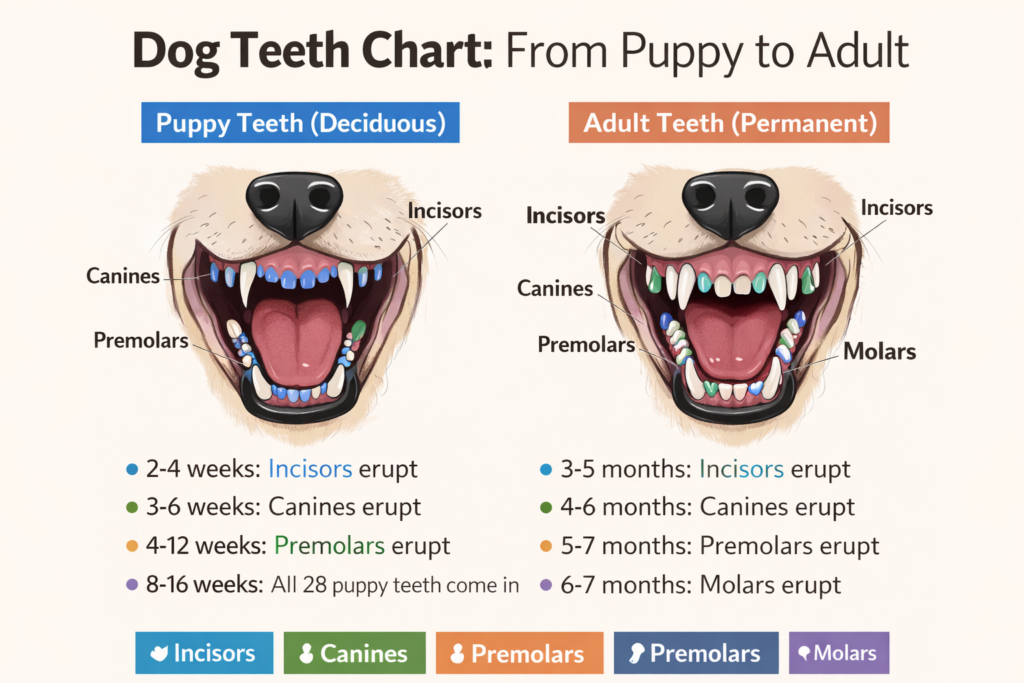
Teeth Development (Most Accurate Tool)
- No teeth → under 2–3 weeks
- Incisors (front teeth) → 3–4 weeks
- Canines (fangs) → 4–5 weeks
- Premolars erupting → 5–6 weeks
- Full baby teeth (28 total) → 6–8 weeks
Mobility & Coordination
- Crawling / paddling → 0–2 weeks
- Wobbly standing/walking → 2–3 weeks
- Walking, clumsy play → 3–4 weeks
- Running, wrestling → 4–6 weeks
- Coordinated, playful, chasing → 6–8+ weeks
Eating & Behavior
- Nursing only → under 3–4 weeks
- Interest in gruel → 3–4 weeks
- Eating soft food → 4–5 weeks
- Eating solids well → 5–7 weeks
- Fully weaned → 7–8 weeks
Weight Rule (Quick Estimate)
- Small breeds vary a lot, but general guide:
- ~1–2 lbs → 4–6 weeks (small breed may be less)
- ~3–5 lbs → 6–8 weeks (breed dependent)
Unlike kittens, weight is less reliable—always confirm with teeth + behavior.